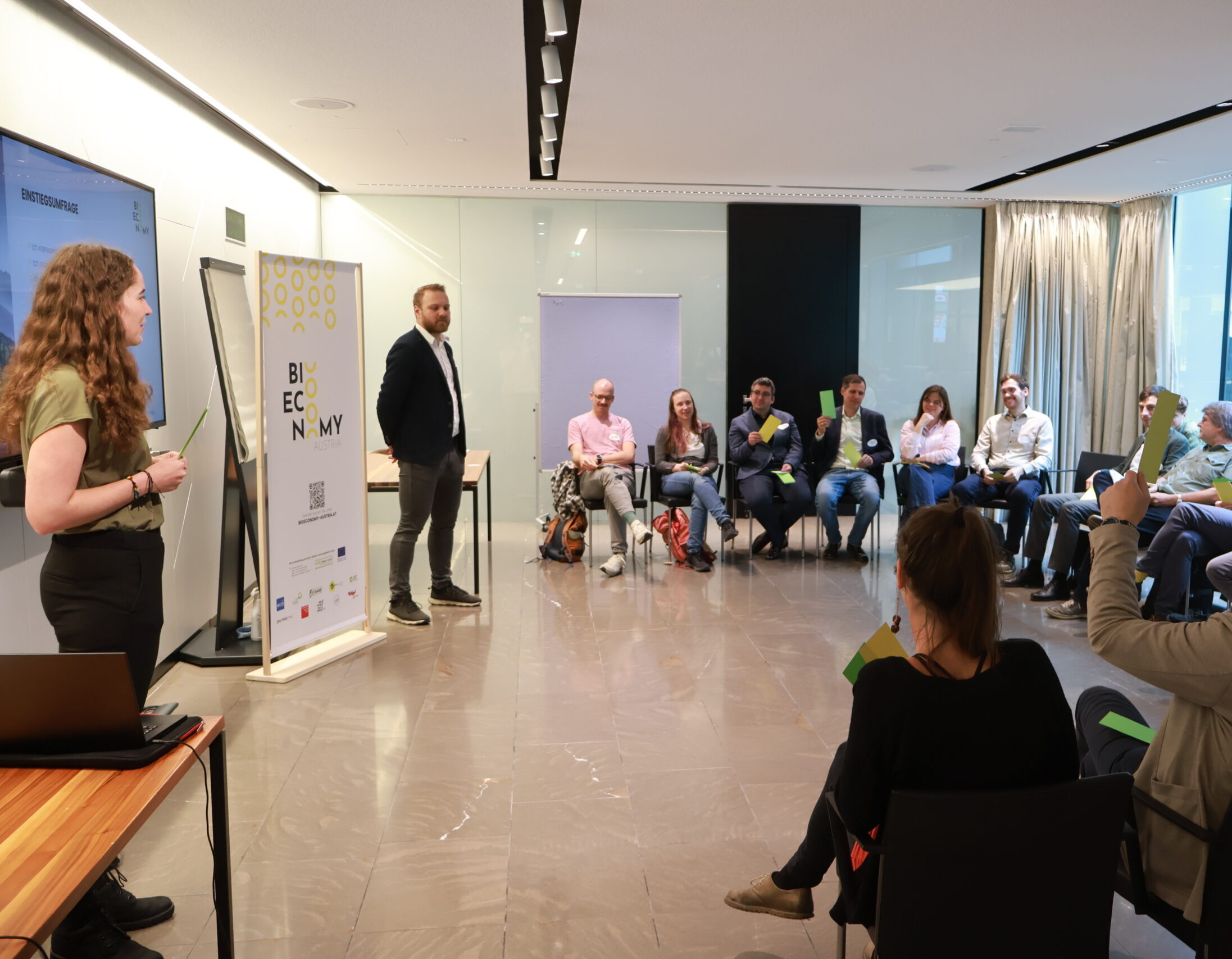
On May 7, Bioeconomy Austria hosted a workshop on residual biomass potentials, focusing on forest wood chips, corn stover, and corn cobs, as part of the Circular Economy Summit Austria in Graz. The workshop is part of a Bioeconomy Austria impulse project on residual biomass potentials and was jointly organized by BioBASE, the Ökosoziales Forum Österreich & Europa, and Holzcluster Steiermark.
The aim of the interactive format was to bring together stakeholders from agriculture and forestry, science, industry, and public administration to analyze the potential of agricultural and forestry residues and identify concrete steps towards their cascading use.
Introduction and Workshop Process
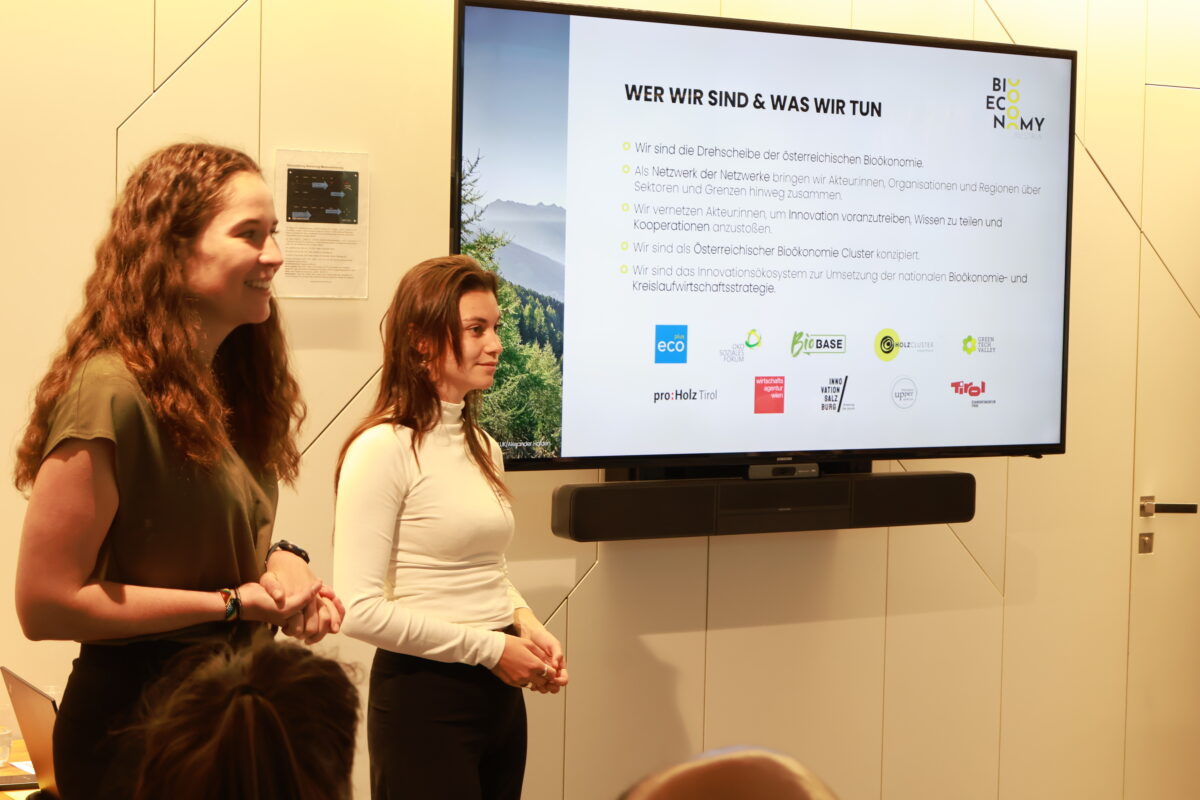
Following a brief introduction to Bioeconomy Austria and the impulse project by Martina Bärnthaler (Ökosoziales Forum) and Franziska Wolf (BioBASE), the selected biomass residues and their current applications were presented. Kilian Silberschneider (Holzcluster Steiermark) introduced forest wood chips, while Thomas Timmel (BioBASE) focused on corn stover and corn cobs.
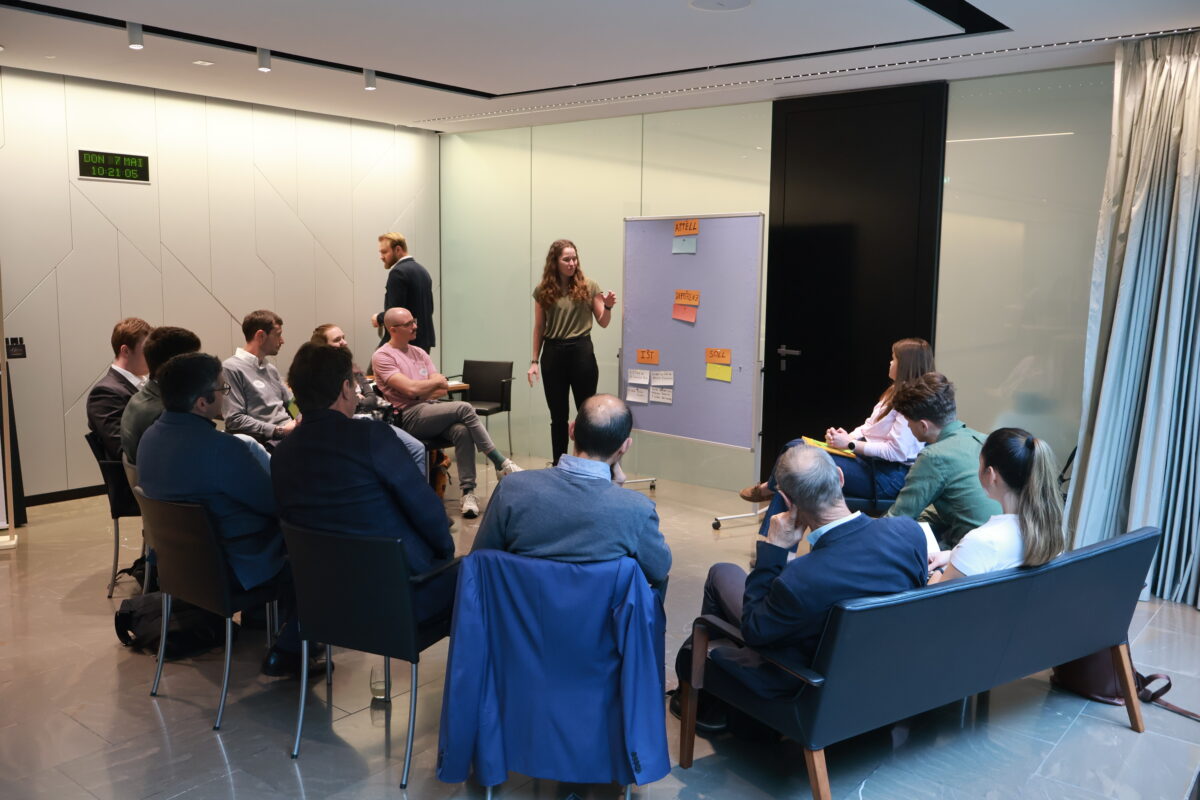
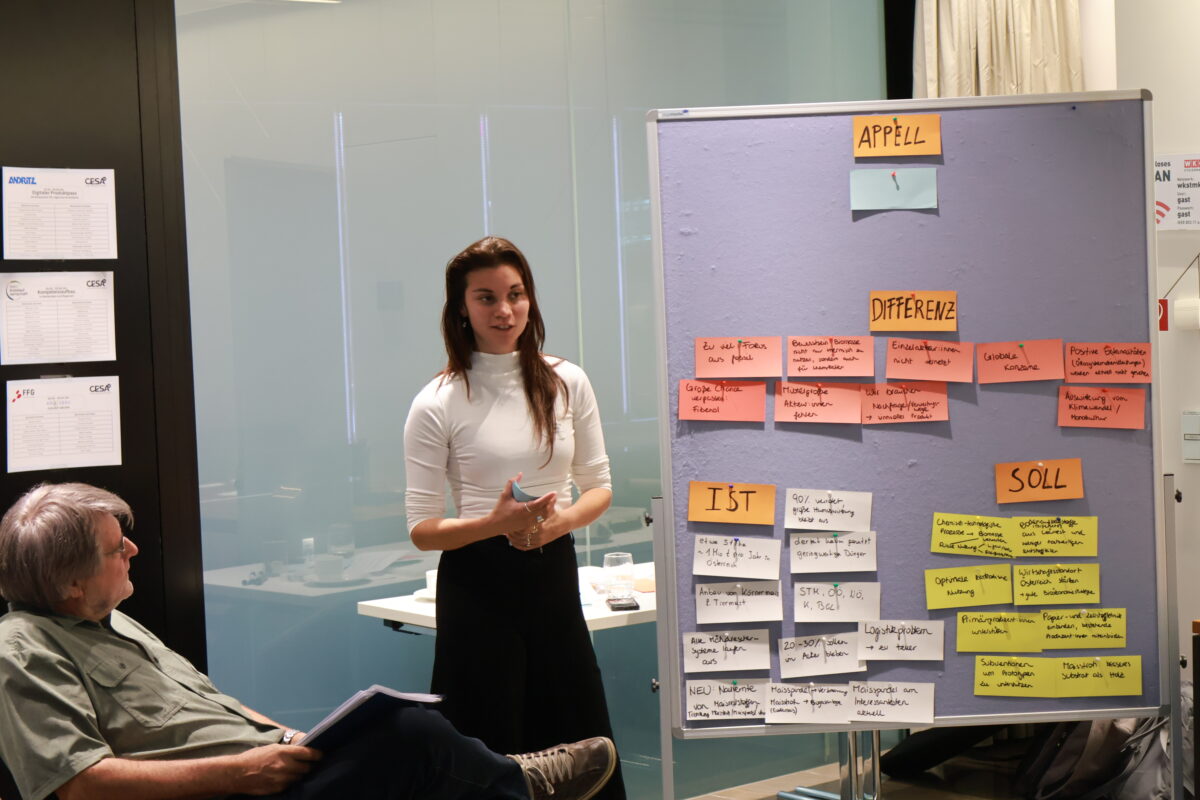
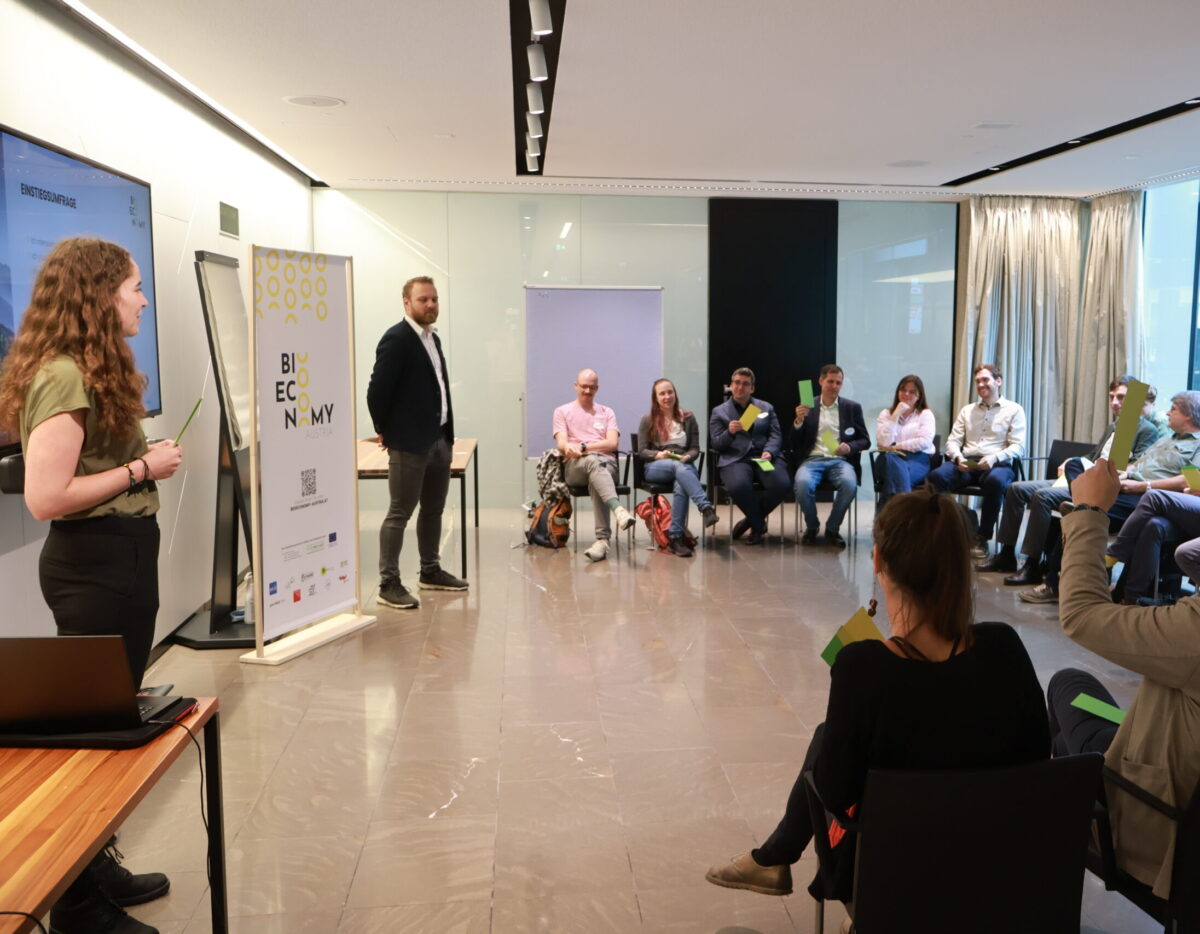
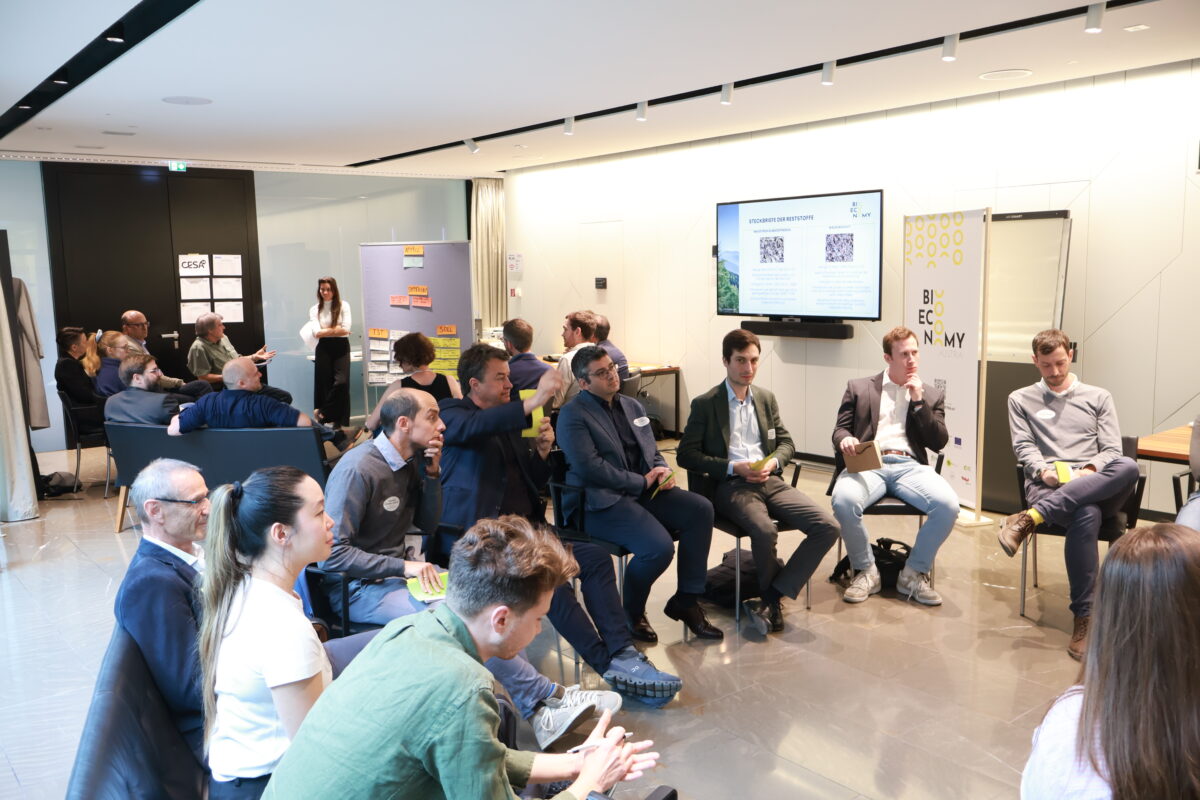
During the workshop, participants worked in two groups focusing on forest wood chips and agricultural residues. Together, they identified the current state of biomass residue use, developed future scenarios, and derived key challenges. Building on this, the groups discussed possible solutions and necessary framework conditions.
Experts from research institutions, public administration, companies, interest groups, and the agricultural and forestry sectors participated in the workshop.
Residual Biomass Potentials: Great Opportunities, Clear Challenges
The discussions clearly showed that corn residues and forest wood chips have significant potential in Austria but are currently underutilized. Large quantities remain on fields, in forests, or are directly used for energy generation.
Participants emphasized the need for stronger cascading use approaches in the future, where raw and residual biomass should first be used materially and only afterwards for energy purposes. Potential applications discussed included lignin and cellulose extraction, chemical applications, peat substitute products, as well as biochar and CO₂ sequestration.
Rather than technological limitations, the key challenges identified were economic, organizational, and structural barriers. Participants highlighted missing market structures and financial incentives, limited sales opportunities and buyers, high logistics costs, fluctuating raw material quality, and insufficient networking among relevant stakeholders. In addition, awareness of material uses of biomass remains limited.
The workshop highlighted major opportunities for the Austrian bioeconomy if stakeholders can be better connected and concrete projects initiated. It became clear that pilot projects, new collaborations, and coordinating structures will be needed to establish innovative value chains and bring new utilization pathways into practice. Future efforts should increasingly focus on implementation, networking, and the development of regional bioeconomy structures.
Outlook
The workshop was met with great interest and provided valuable input for the ongoing project work. A second workshop as part of the impulse project will take place in Salzburg this autumn. The aim is to further develop and refine the ideas generated during the first workshop.
Many thanks to all participants for the valuable exchange and discussions!
(c) Bioeconomy Austria