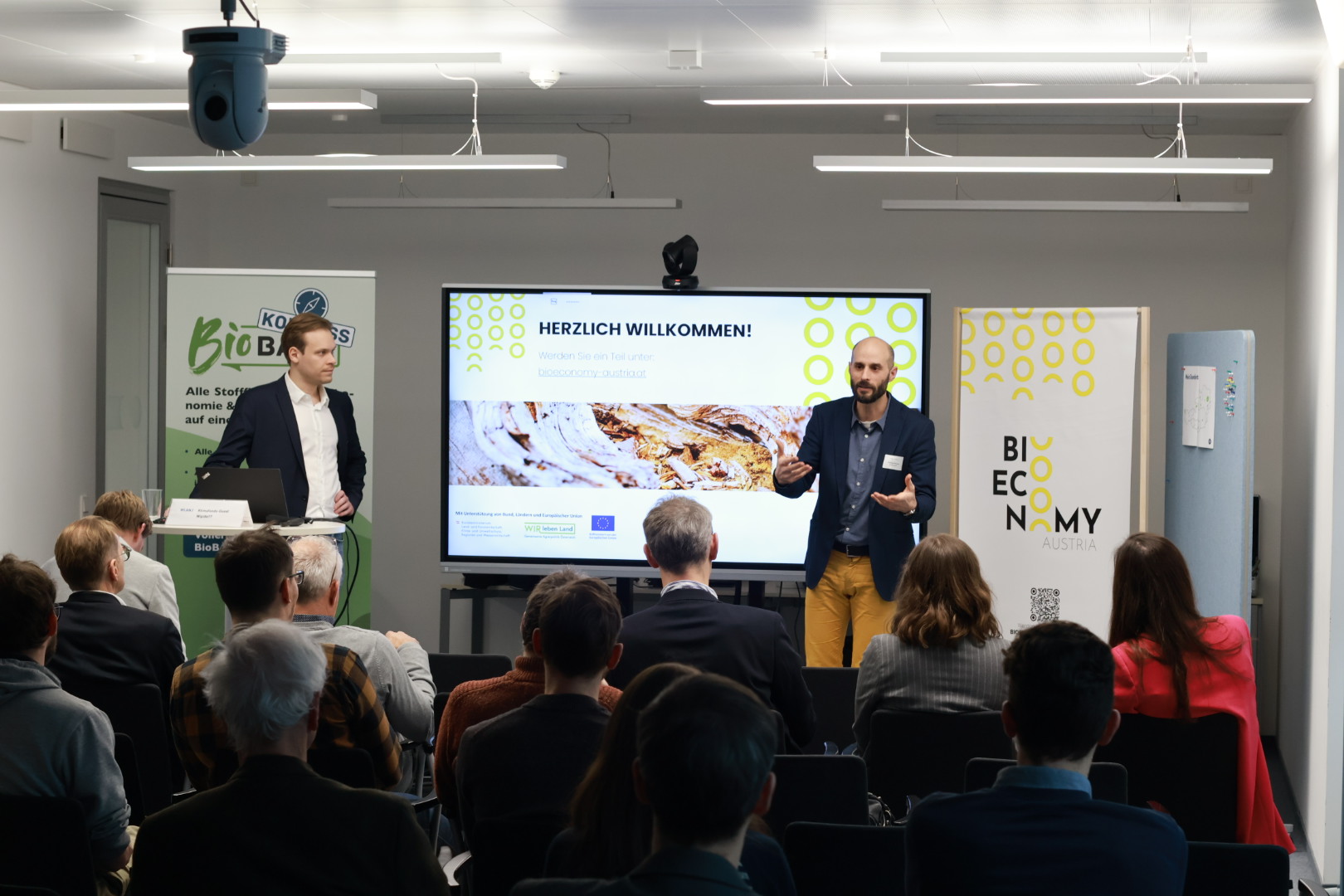
On January 28, 2026, BioBASE, Green Tech Valley, and ecoplus, together with Bioconomy Austria, invited participants to an exchange on the role of biogenic carbon in the transition toward comprehensive carbon management. The event focused on introductory keynote presentations as well as an interactive workshop setting, where the importance of biogenic CO₂ emissions and sinks was explored in greater depth and concrete project ideas were developed. The focus was on both CO₂-based value chains in the sense of Carbon Capture and Utilisation (CCU) and Carbon Dioxide Removal (CDR) measures such as biochar.
Introduction of Bioeconomy Austria
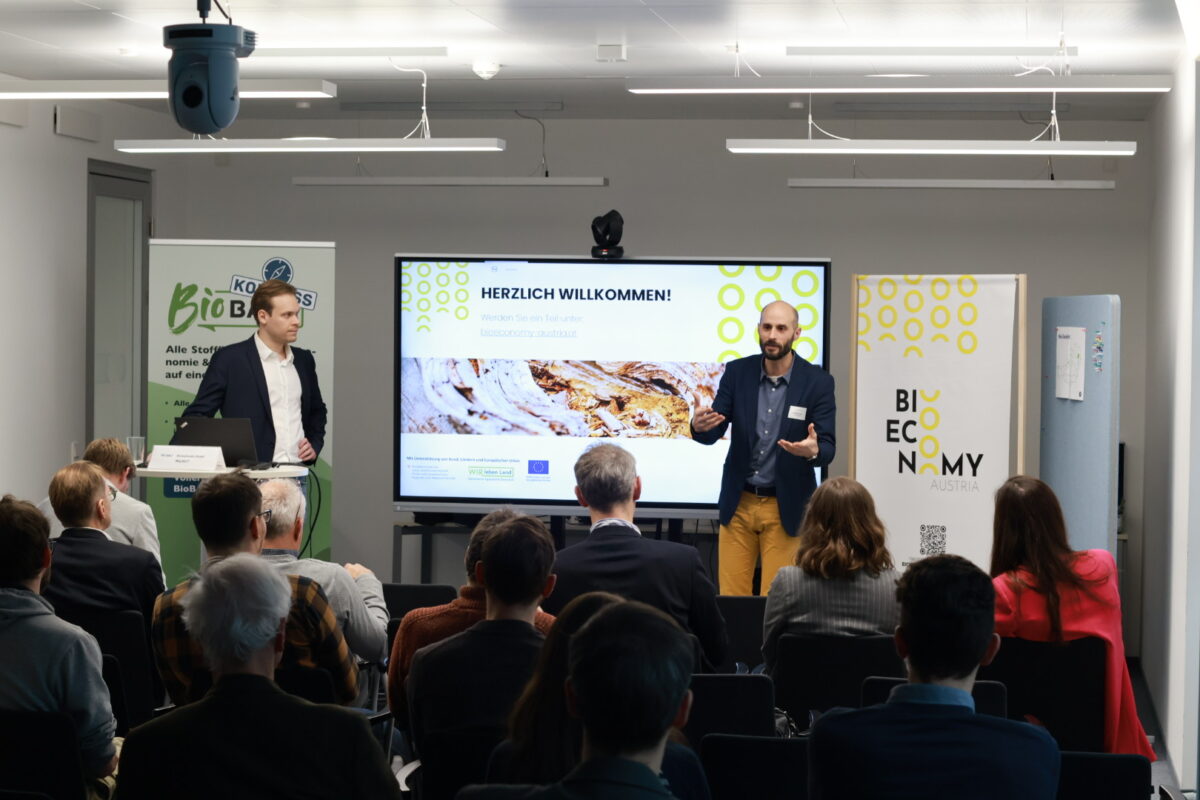
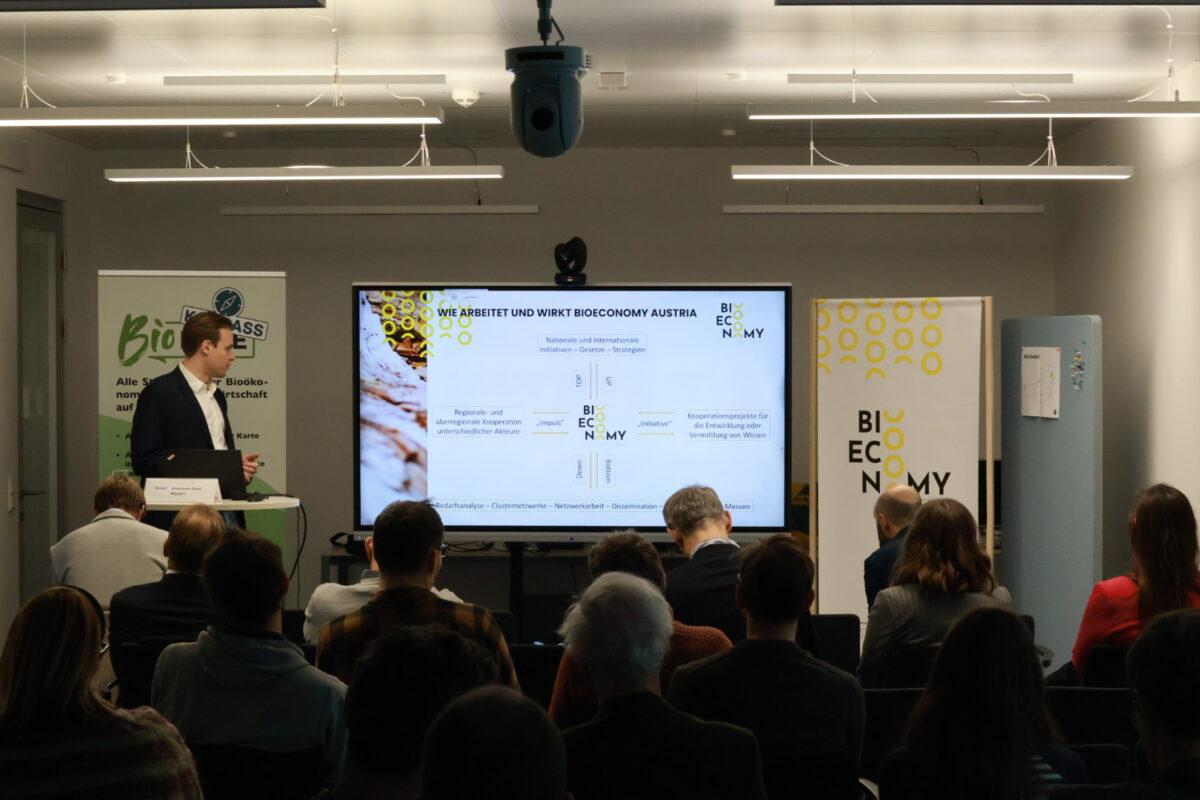
Following the opening by BioBASE CEO Thomas Timmel, who emphasized the role of carbon management and biogenic CO₂ streams in the broader transformation of society and industry, Fabian Huber (ecoplus) introduced the Bioeconomy Austria project. Huber presented the background and objectives of Bioeconomy Austria, as well as the importance of cooperation in advancing the bioeconomy and innovative projects, also in the context of CCU/S.
Thermal Waste Treatment with Carbon Capture – Potentials and Challenges
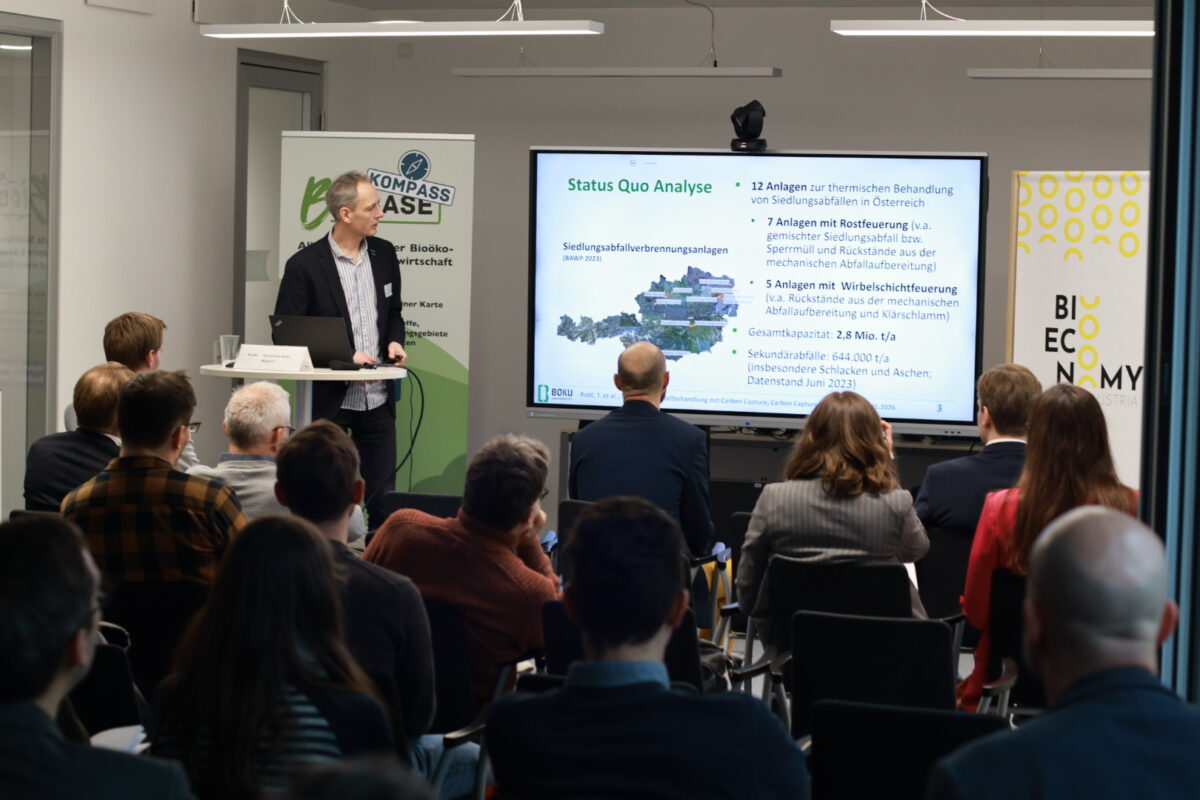
In his contribution, Tobias Pröll (BOKU) highlighted the potentials and challenges of carbon capture in thermal waste treatment. He pointed out that a significant share of CO₂ emissions is of biogenic origin, which, in combination with CC(U)S, enables negative emissions. He also addressed technological options, regulatory frameworks, and economic considerations, outlining the conditions under which carbon capture can make a meaningful contribution to climate goals.
Cooperation as a Key Factor: Biogenic CO₂ from the Paper and Pulp Industry as a Resource of the Future
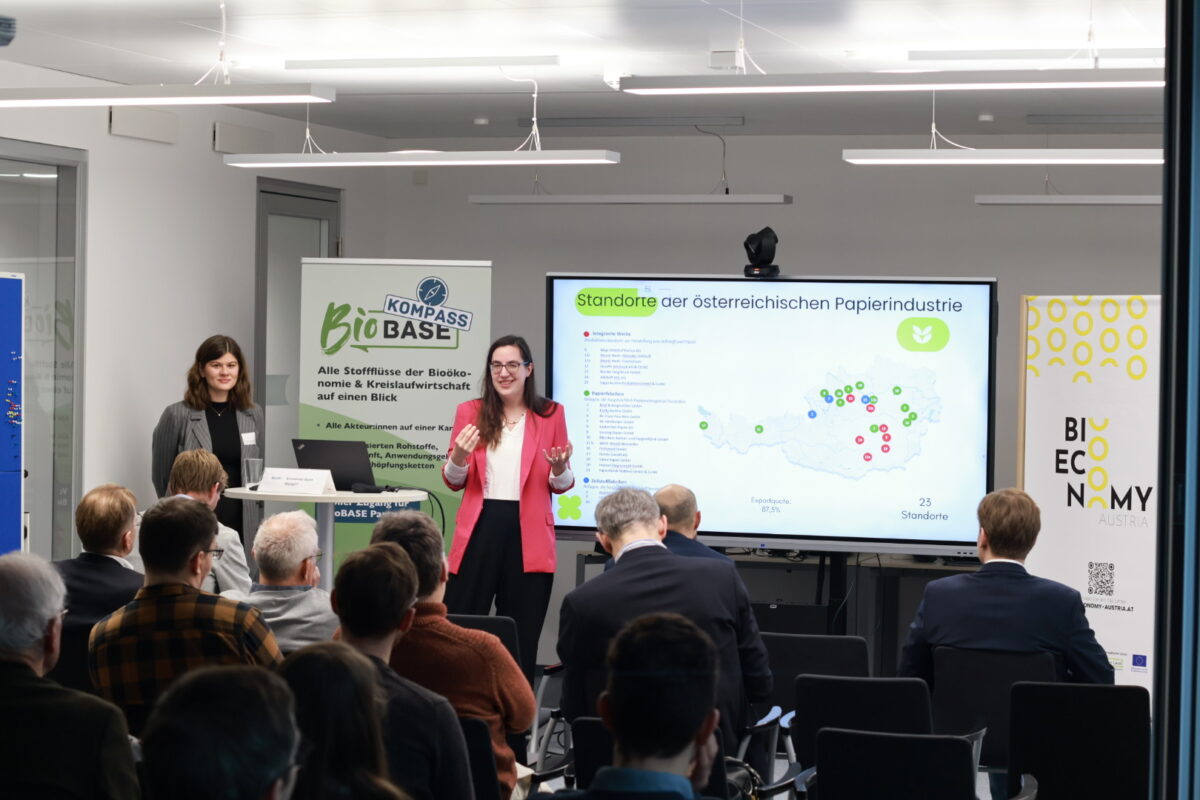
Elisabeth Krassnigg (Austropapier) and Daniela Leibetseder (AIT) demonstrated the potential of biogenic CO₂ from the paper and pulp industry as a future resource. They emphasized that cooperation along the entire value chain is crucial to harness CCU and CDR potential. Using the industry project CEUS-PPI as an example, they explained technological options, economic perspectives, and the importance of appropriate regulatory frameworks and infrastructure for implementing CCU(S) solutions.
Biochar as a Regional Carbon Sink
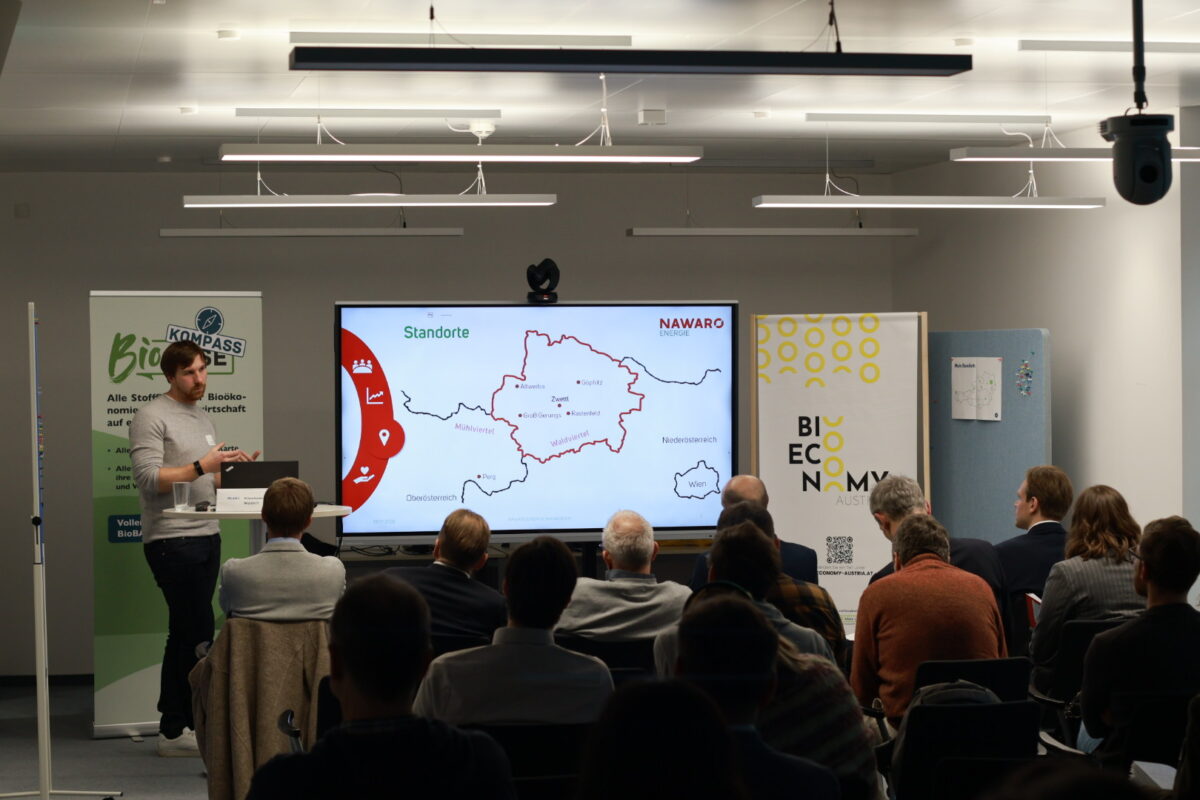
Christian Mizelli (NAWARO Energie) presented the Perg wood gas power plant as an example of regional, decentralized energy generation with an integrated carbon sink. He showed how electricity and heat are produced from regional biomass while simultaneously generating biochar as a long-term stable carbon storage medium. Using concrete figures, he demonstrated the potential of biochar as a CDR measure and how regional value creation, energy security, and carbon negativity can be combined.
Conclusion and Outlook
The event made clear that biogenic carbon plays a central role in the transition toward holistic carbon management. It demonstrated that both CCU-based value chains and CDR measures are essential building blocks for achieving climate goals. The expert exchange also highlighted that companies and research institutions need clear frameworks, strong cooperation, and realistic implementation pathways to effectively and economically transform biogenic CO₂ streams into sustainable solutions. Building on the keynote presentations, ideas for further project development were elaborated in a joint workshop setting, which will be taken up and further developed by members of Bioeconomy Austria in the coming months.
© BioBase