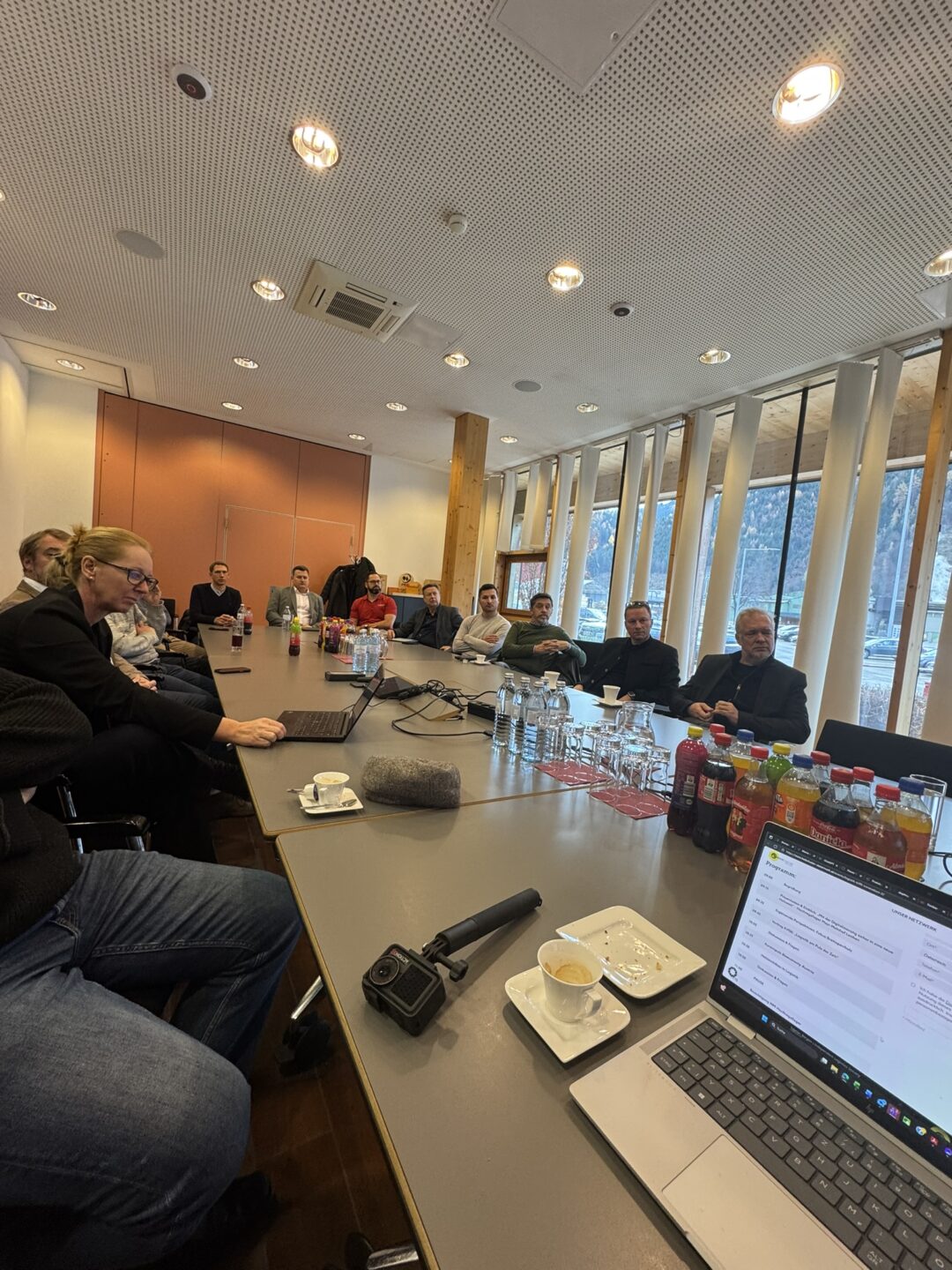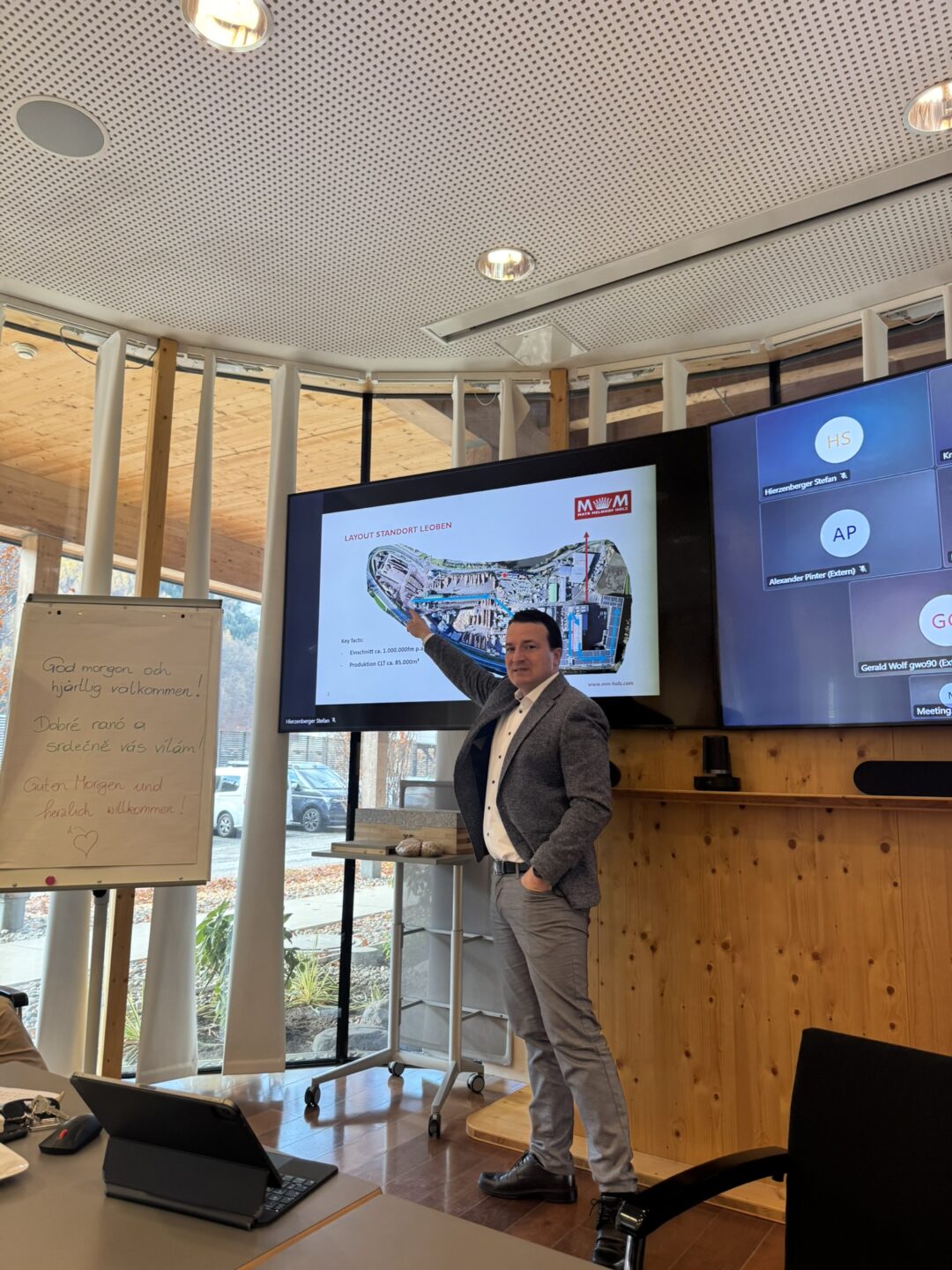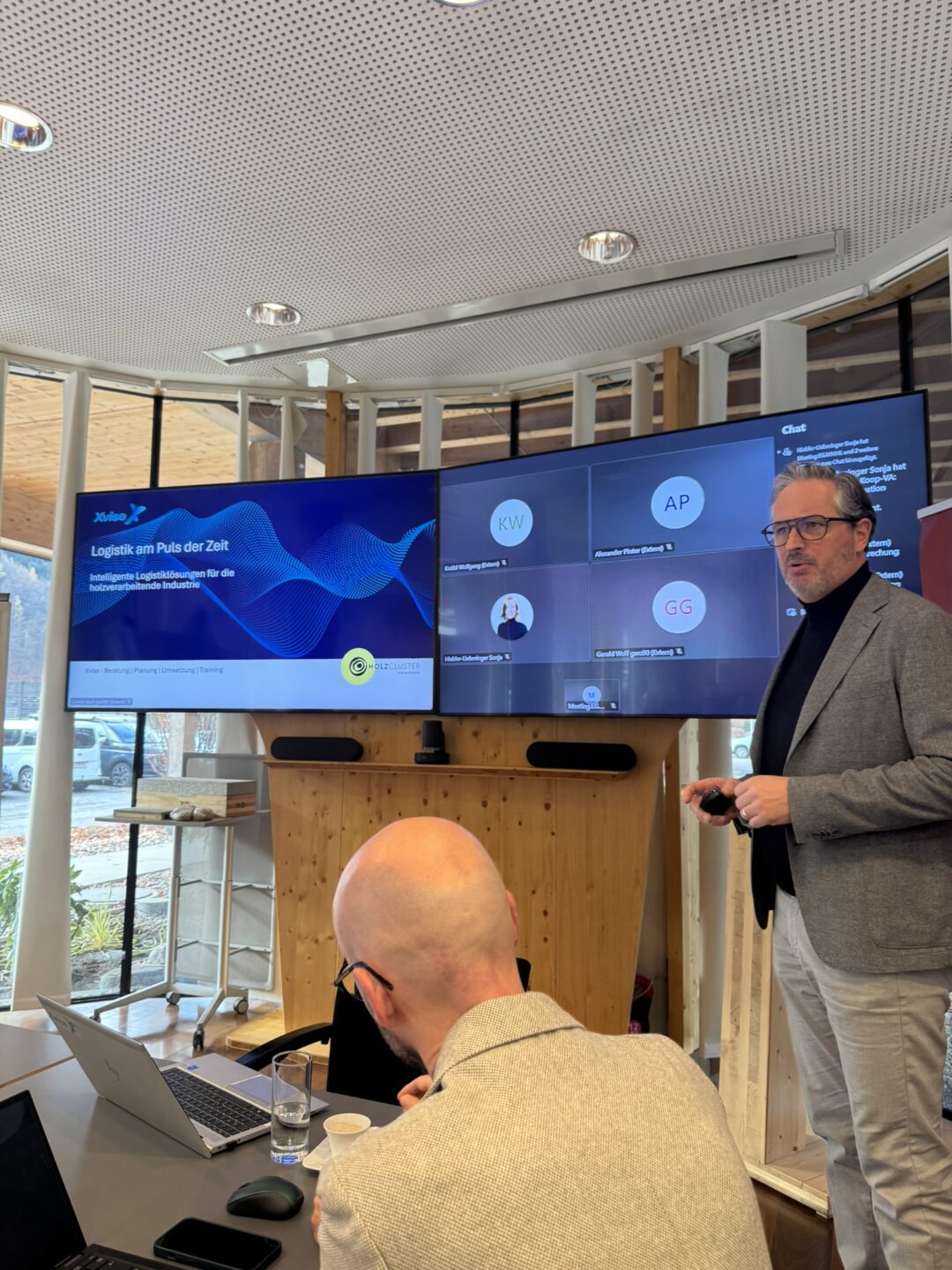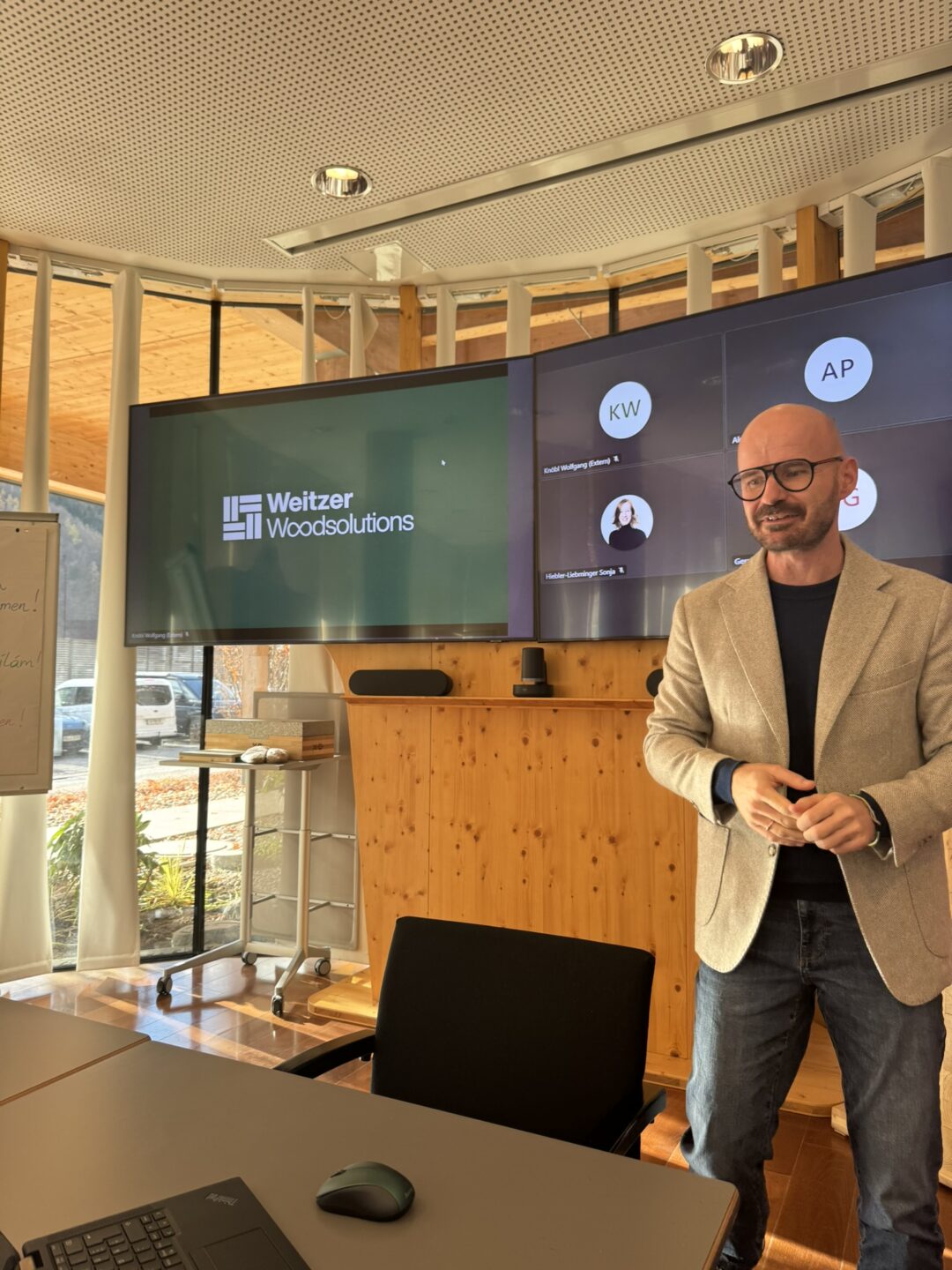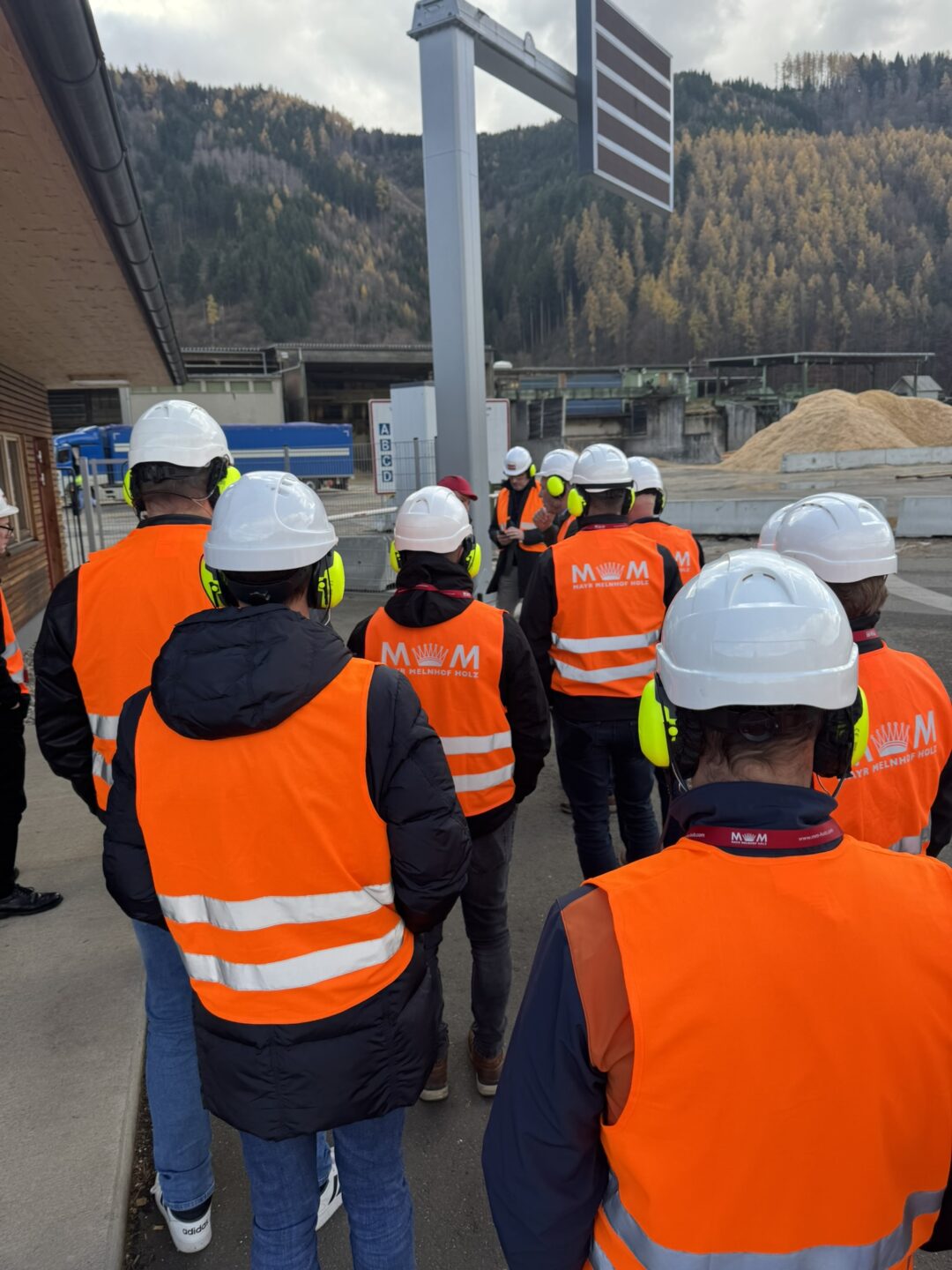
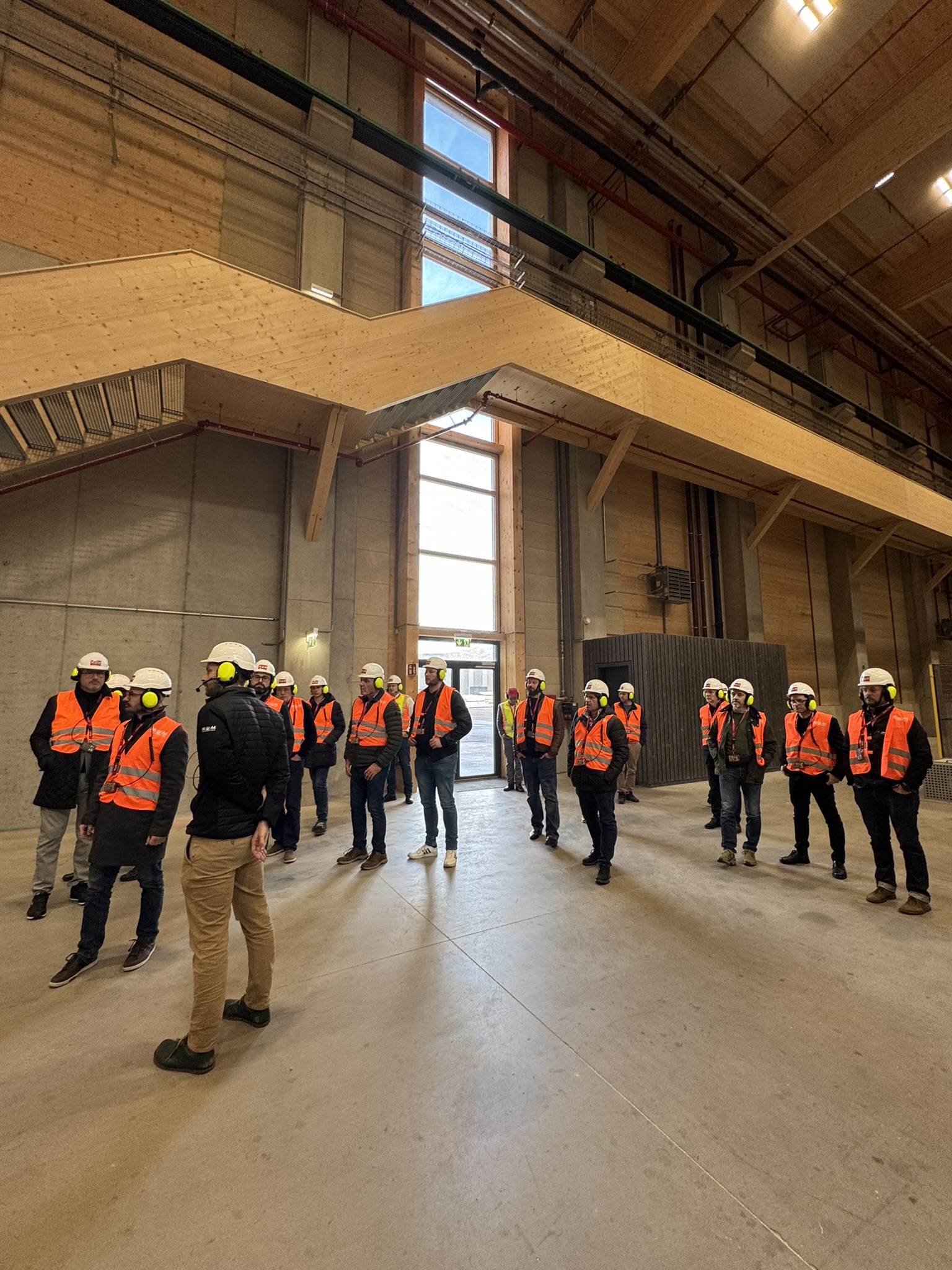
On November 18, 2025, the Wood Cluster Styria, together with Bioeconomy Austria, Xvise and Mayr-Melnhof Holz, invited participants to a specialist event in Leoben. The focus was on the new high-bay warehouse of Mayr-Melnhof Holz – an example of how digital intralogistics, integrated value creation and material-efficient lightweight timber construction solutions interact.
Logistics as Part of Value Creation
In his opening remarks, CEO Richard Stralz emphasized that modern logistics only has an impact when it is embedded in functioning production and value creation systems. The new high-bay warehouse with around 7,000 storage spaces, automated packaging and direct connection to cross-laminated timber production demonstrates how digital processes can increase efficiency and stability in industrial operations.
Challenges and Solutions
Gerald Wolf (Xvise) illustrated where the logistics of the wood industry reach their limits: inconsistent data flows, isolated IT solutions and missing interfaces. Innovation therefore primarily means robust systems and reliable data.
The project managers from Mayr-Melnhof Holz, Stefan Hierzenberger and Martin Klingenbrunner, explained the planning and implementation of the new high-bay warehouse and highlighted how crucial the coordination between IT, mechanics, production and logistics was.
Lightweight Timber Construction and Bioeconomy in Focus
The Wood Cluster deliberately set content-related accents in the expert contributions. Alexander Pinter showed how Bioeconomy Austria and the Wood Vision Lab create innovation spaces that promote material efficiency, CO₂ reduction and cross-sector collaboration.
Wolfgang Knöbl (Weitzer Woodsolutions) explained how lightweight timber construction and hybrid structures facilitate transport and handling, enabling direct efficiency gains in logistics. His examples made it clear: material innovations and logistics are becoming increasingly intertwined.
Insights into Practice
The tour through the high-bay warehouse and the cross-laminated timber plant offered participants a direct impression of automated processes, systemic integration and the role of digital solutions in the modern wood industry.
Conclusion
The event demonstrated that the future of the industry lies in the combination of digital logistics, integrated value chains and material-efficient lightweight timber construction. The professional exchange in Leoben made it clear that companies are seeking orientation – and that joint, realistic solutions are crucial for how productive, resilient and climate-fit the wood industry will be in the future.